
I Survived. But Why?
Rethinking Providence after Deconstruction

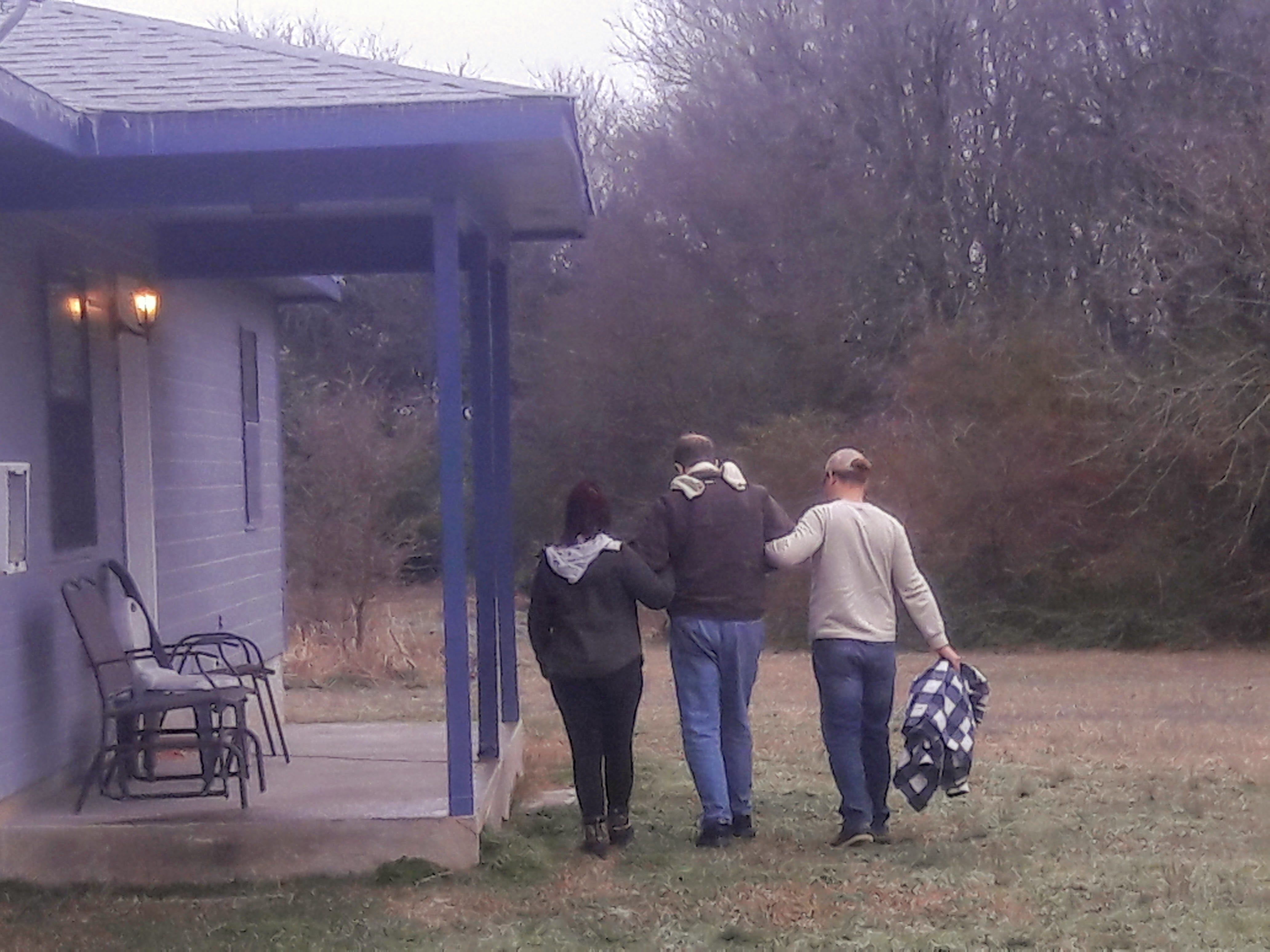
I used to believe God controlled everything.
Not just the big things. Everything.
Every. Little. Detail.
Nothing happened by chance. Nothing caught God by surprise. Every event, good or bad, was part of his eternal decree. Even when life seemed chaotic, I believed there was an order behind it. God was working out his purpose in miniscule detail.
That belief gave me a tremendous sense of security.
It also created some difficult questions.
If God controlled everything, what did that say about suffering? When tragedy came, was I supposed to believe God had sent it? If he could have prevented it and chose not to, how was that different from causing it?
For years, I had answers to those questions. Or at least I thought I did.
That was before I deconstructed.
When I left my Calvinistic theology behind I was forced to rethink many of the theological assumptions I’d carried for most of my life. Providence was one of the hardest. I didn’t want to give up the belief that God is present and active in the world. But I could no longer accept some of the things I had once said so confidently about God’s control.
And then, on January 27, 2021, I had a massive heart attack.
I had no warning. No symptoms.
I went to bed one night and woke up in a hospital about a week later. Once I was conscious enough to understand what had happened, my wife began filling in the missing pieces.
Sometime around five in the morning, I had gone into cardiac arrest. My daughter, who lives next door, came over and performed CPR until the Campbell volunteer fire department arrived. They continued working on me until the Hunt County EMS crew took over.
Altogether, I was down for fifty-three minutes.
For nearly an hour, I was in V-fib. I had to be shocked six times before a normal rhythm was restored. After I was stabilized and my blockage treated in Greenville, they airlifted me to Medical City Dallas, where doctors continued working to save me.
After a week in a medically-induced coma, I woke up.
More than that, I survived without any obvious physical disability or major cognitive impairment. I walked out of the hospital. In the years since, I have written, sung, acted, spoken, created art, and watched my grandchildren grow.
One of my doctors told me, “I don’t use the word ‘miracle’ lightly, but in your case I’ll make an exception.”
How am I supposed to understand that?
Before deconstruction, I probably would have had a ready answer. God planned every detail. He placed my daughter next door. He made sure she was awake and able to respond. He guided the firefighters and paramedics. He kept my brain alive while my heart was chaotic.
He preserved me because he still had a purpose for my life.
I still believe some of that.
At least, I think I do.
When I look back on that morning, on the one hand I see providence. There were too many things that came together at precisely the right time. If my daughter had not decided to live next door, if she would have already left for work, if the first responders had arrived later, if they had stopped trying sooner, I wouldn’t be here.
I cannot look at those events and see only coincidence.
But neither can I speak about them as confidently as I once might have.
If God decided to save me, what do I say about the people whose stories ended differently?
My survival was extraordinary, but many families have watched first responders work just as hard and have prayed just as earnestly, only to lose the person they loved.
I’ve lost two friends to identical heart attacks in the past few years. Were their families less faithful? Were their prayers less effective? Did God have a purpose for my life but not for their lives?
I cannot believe that.
This is where my old understanding of providence breaks down.
It is easy to call something providential when the outcome is the one we hoped for. It is much harder to explain providence when the outcome was different in the hospital room down the hall.
Sometimes I wonder why I survived.
But perhaps “Why?” is the wrong question.
The question assumes there must be a specific reason, that God saved me to complete some assignment or accomplish some grand purpose. Maybe there is one. But I’m wary of making my survival more important than it is or turning my life into the center of a divine drama.
Perhaps surviving is not evidence that I was more needed on earth than someone who died.
Perhaps it simply means that I survived.
And perhaps providence is found not in an explanation for why I lived, but in the presence of God within what happened.
Maybe God did not cause my heart attack or choose it for me. Maybe God was present in my daughter’s hands as she performed CPR. Or in the persistence of first responders who refused to stop. Or in the knowledge and skill of doctors and nurses. Or in the love of family members who waited and prayed.
Maybe providence does not require God to control every event.
Maybe it means God is always working within events and through people: healing, sustaining, redeeming, and calling us toward life.
I realize that doesn’t solve the problem. It doesn’t explain why some people survive and others don’t. It doesn’t tell me precisely when something is providence and when it is coincidence. It leaves plenty of questions unanswered.
But I’m learning to live with unanswered questions.
Deconstruction took away my ability to explain providence with a neat theological formula. It did not take away my sense that I have encountered it.
I somehow came back from the edge of death.
I don’t know why.
All I know is that I am still here.
But when I look back on that terrible morning, I cannot help but believe that somewhere in the frantic effort to keep me alive, God was there.
Maybe that’s enough.
Well I’m certainly happy and glad that did. I’m blessed by your honest and transparent posts Jim.
I appreciate the way you articulate the unanswerable questions and self-checks that arise when one seriously interrogates the standard Christian takes on a story like yours.
For quite a while I imprecisely, somewhat fuzzily held onto the idea of an all loving, omniscient and omnipotent deity who *sometimes* chooses to intervene directly in human circumstance but *usually* doesn't and instead is present and just works in and through whatever circumstances occur in the natural order of things . . . but eventually when other studies seriously called into question for me the historicity of the claims about YHWH, Israel, the historical Jesus and the core historical claims of the Christian faith, when I turned back to reexamine my takes on Providence, the problem of suffering, what to make of extremely rare but not unheard of occurrences and coincidences, i felt I had to acknowledge I had been trying to square a circle on those issues.
An analogy I sometimes think of is a powerball lottery. The odds against winning are astronomical. But the odds that SOMEONE is going to win, are quite high. But if I was the one to win, I would probably feel a pull to think there must be some type of providential meaning or purpose or cosmic fiddling with either the numbers I played or the numbers that popped up such that *I* was the lucky one. I can't blame someone for feeling that way or coming to that conclusion, and there's no way to conclusively either disprove or prove the existence of such a Providence.
I'm glad you survived, and I'm glad you've become the kind of Christian you are rather than the kind you used to be. Tbh despite our landing in different places with regard to theism, I think we're both better off being where we are belief-wise than where we were, and the world is better for us both landing where we've respectively landed, than if we had stayed where we each were.